You Won't Believe What I Ate in Chiang Rai's Hidden Corners
Chiang Rai isn’t just about temples and mountains—its soul lives in the sizzling woks and family-run food stalls tucked down narrow alleys. I went off the map, followed smoke from street grills, and discovered flavors so bold, they redefined Thai food for me. This is real food culture: raw, unfiltered, and unforgettable. Far from polished restaurants or tourist-centric menus, the heart of northern Thailand beats strongest in its everyday kitchens, where generations pass down recipes with quiet pride. Here, food is not performance—it’s life, memory, and community served on a banana leaf.
Arrival in Chiang Rai – A First Impression Beyond the Tourist Trail
Stepping off the bus into the morning haze of Chiang Rai, I was struck by how different this city felt from the bustling energy of Bangkok or even Chiang Mai. The air carried a crispness unique to northern Thailand’s highlands, mingled with woodsmoke and the faint sweetness of ripe mango. My first glimpse of the famed White Temple—Wat Rong Khun—gleamed under the rising sun, its mirrored surfaces scattering light like shattered glass. It was breathtaking, yes, but also distant, almost otherworldly. I knew that to understand this place, I had to look beyond the postcard sights.
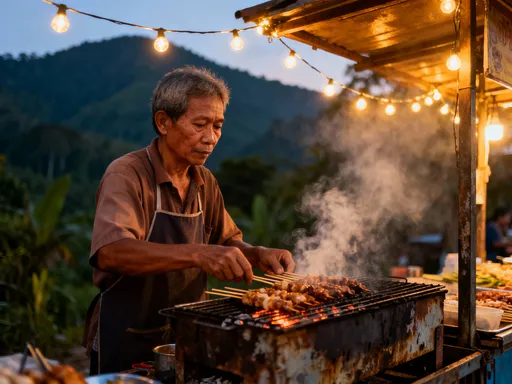
Leaving the main road behind, I wandered into quiet neighborhoods where laundry fluttered between wooden houses on stilts and roosters crowed from unseen yards. Children pedaled bicycles to school while elders swept front steps with bamboo brooms. There were no tour groups, no souvenir shops, only the slow rhythm of daily life. In these corners, food was already at work—steam curling from clay pots, the scent of grilled pork skewers drifting through alleyways. I realized then that Chiang Rai’s true essence wasn’t in its architectural wonders, but in the humble rituals of cooking and sharing meals.
This quiet contrast shaped my journey. Instead of chasing landmarks, I followed my nose. I sought out corners where locals gathered, not for photos, but for flavor. What I found wasn’t staged for visitors; it was lived, real, and deeply rooted in Lanna tradition—the ancient culture of northern Thailand. My goal became clear: to experience Chiang Rai not as a spectator, but as someone welcomed at the table.
The Pulse of Local Life – Morning Markets and Breakfast Rituals
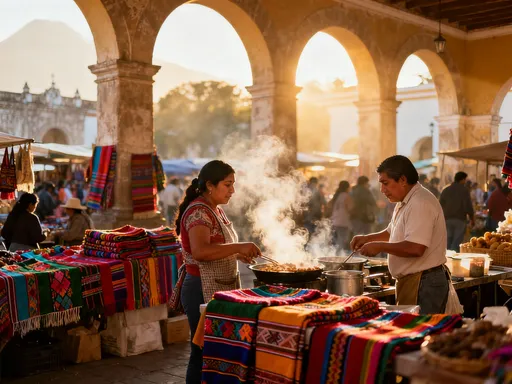
No place reveals the soul of a city faster than its morning market, and Warorot Market in Chiang Rai is a symphony of sensory awakening. By 6 a.m., vendors are already arranging pyramids of purple yams, bundles of lemongrass, and baskets of wild mountain greens. The air hums with chatter, the clatter of metal scales, and the sizzle of oil in woks. This is where the city eats, plans its day, and connects. For travelers willing to rise early, it’s also where the most authentic food culture begins.
Breakfast here is not a quick bite—it’s a ritual. Locals gather around small plastic tables to enjoy steaming bowls of khao soi, the rich coconut curry noodle soup that defines northern Thai cuisine. Unlike versions found elsewhere, Chiang Rai’s khao soi balances creaminess with a deep, earthy spice, topped with crispy fried noodles and a squeeze of lime. Beside it, sai oua—a grilled sausage packed with lemongrass, kaffir lime leaves, and red curry paste—adds a smoky, herbal kick. Sticky rice, served in woven baskets, is the quiet hero of the meal, perfect for soaking up every last drop of sauce.
What makes this experience special is not just the food, but the timing. Eating early means joining the rhythm of local life. Farmers, shopkeepers, and teachers start their day here, often with the same vendor for years. I watched one woman greet her noodle seller with a warm laugh, exchanging news before he even handed her her usual order. These small moments reveal how food functions as social glue. In Chiang Rai, breakfast isn’t just fuel—it’s connection, routine, and comfort, all served before the sun climbs too high.
Hidden Street Eats – Following the Locals, Not the Maps
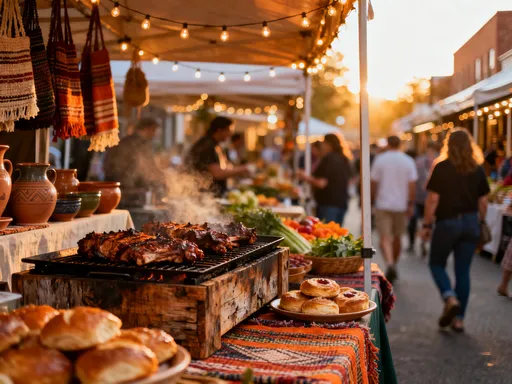
The best meals in Chiang Rai aren’t listed on apps or marked with signs. They’re found by watching where locals park their motorbikes. One afternoon, I noticed a cluster of scooters near a nondescript corner stall with a single wok over charcoal. No menu, no chairs—just a line of people holding plastic bags. I waited, and what I tasted changed everything: gaeng hang lay, a Burmese-influenced pork curry slow-cooked with turmeric, ginger, and tamarind. It was rich but not heavy, sweet but not cloying, with a depth that spoke of generations of refinement.
Another discovery came in the form of miang kham—tiny, explosive bites that pack sour, sweet, salty, bitter, and spicy into a single mouthful. Traditionally wrapped in dried coconut shell cups, they combine roasted coconut, dried shrimp, lime, chili, and toasted peanuts, all wrapped in wild betel leaf. Eating one feels like a celebration of balance, a culinary metaphor for life itself. Vendors often sell them in small bundles, perfect for sharing or savoring slowly as a snack.
What defines these flavors is a fearless use of bold ingredients. Fermented fish sauce, pungent shrimp paste, and fresh chili are not afterthoughts—they are foundations. Herbs grow wild here: sawtooth coriander, Vietnamese mint, and holy basil add layers that mass-produced versions of Thai food often miss. These aren’t exotic novelties; they’re everyday essentials. The heat isn’t meant to overwhelm but to awaken, to make you notice each ingredient. To eat in Chiang Rai is to understand that flavor isn’t about luxury—it’s about honesty.
Cooking Like a Local – A Hands-On Experience in a Village Kitchen
To truly grasp Chiang Rai’s food culture, I knew I had to step into a kitchen. Through a local guide, I was invited to spend a day with a Lanna family living in a riverside village along the Kok River. Their home, built on wooden stilts with a thatched roof, opened to a garden bursting with herbs and vegetables. The matriarch, Khun Yui, greeted me with a gentle smile and immediately put me to work grinding curry paste in a stone mortar.
The mortar-and-pestle technique is more than tradition—it’s transformation. As I pounded lemongrass, galangal, and dried chilies, the aromas released slowly, building complexity with each strike. Khun Yui corrected my grip, showing how the motion comes from the wrist, not the arm. “This is how we keep the flavor alive,” she said. “Machines chop, but hands feel.” Her words stayed with me. This wasn’t just cooking; it was preservation.
We prepared several dishes, including nam prik noom, a green chili dip made from roasted peppers blended with garlic and fish sauce. It was served with fresh vegetables and crispy pork rinds, a meal both simple and deeply satisfying. As we ate together on the porch, Khun Yui shared stories of her childhood—how her mother taught her to cook during harvest season, how certain dishes were reserved for festivals, and how food always brought people together. In that moment, I realized that every recipe carries memory. To cook like a local is to inherit a legacy, one stir at a time.
From Farm to Wok – The Ingredients That Make the Magic
Chiang Rai’s flavors begin long before they reach the pan. They start in the soil. I visited a small organic farm near Doi Chan, where farmers grow heirloom varieties of rice, chili, and herbs without synthetic fertilizers. What struck me most was their reverence for seasonality. “We don’t grow what we want,” one farmer told me. “We grow what the land gives us, when it’s ready.” This philosophy shapes the entire food culture—meals change with the months, not with trends.
Among the most prized ingredients are wild ginger, kaffir lime, and turmeric, all grown in shaded gardens or foraged from nearby forests. Wild ginger, with its pale pink tips and floral aroma, is used in soups and curries for its subtle heat. Kaffir lime leaves, crumpled and added at the end of cooking, release a citrusy perfume that defines Thai cuisine. Turmeric, bright orange and earthy, is not only a spice but a natural dye and medicinal herb in traditional practice.
Freshness here isn’t a marketing term—it’s a way of life. Markets receive deliveries at dawn, and vendors sell what’s available that day. If a vegetable is out of season, it’s simply not offered. This contrasts sharply with globalized food systems where everything is available year-round, often at the cost of flavor and nutrition. In Chiang Rai, food tastes vivid because it’s allowed to grow naturally, harvested at peak ripeness, and cooked the same day. The result is a clarity of taste that’s impossible to replicate elsewhere.
Nighttime Bites – Chiang Rai’s After-Dark Food Scene
As the sun sets and the mountains fade into silhouette, a different energy stirs in Chiang Rai. While the city center quiets down, a modest night market near the old bus station comes alive. This is not the kind of place featured in glossy travel magazines. There are no stages, no music, no crowds of foreign tourists. Instead, families, students, and workers gather around low tables under fluorescent lights, drawn by the scent of grilling fish and sizzling pork.
One stall specializes in grilled river fish, caught fresh from the Kok River and marinated in garlic, turmeric, and herbs before being cooked over charcoal. The skin crisps perfectly, while the flesh stays moist and flaky. Beside it, another vendor serves naem—fermented pork wrapped in banana leaves with garlic and chili. It’s tangy, spicy, and surprisingly refreshing, often eaten with sticky rice and fresh vegetables.
For dessert, I found a woman making coconut pancakes—small, golden discs cooked on a flat griddle and filled with sweetened coconut and palm sugar. They’re simple, warm, and deeply comforting, the kind of treat that feels like home. What moved me most was the sense of community. People lingered, chatting across tables, sharing food without pretense. This wasn’t a performance for visitors—it was a nightly ritual, a way to unwind and reconnect. In these quiet moments, I saw how food continues to nourish beyond hunger; it sustains relationships.
Responsible Tasting – Respecting Culture While Seeking Flavor
Eating in Chiang Rai is a privilege, not a right. As more travelers seek “authentic” experiences, there’s a risk of turning local life into entertainment. I made a promise to myself: to be a guest, not a consumer. That meant learning small gestures—smiling before asking to take a photo, removing my shoes when entering a home kitchen, and always saying “kop kun krap” (thank you) with a slight bow. These acts of respect opened doors that money never could.
I also made a point to support small vendors, especially women who have been cooking the same recipes for decades. Many of these stalls operate on razor-thin margins, yet they serve food with pride and generosity. By choosing to eat at their tables, I contributed directly to their livelihoods. I avoided places that seemed designed for tourists, where food felt diluted or overpriced. Instead, I followed locals, trusted my instincts, and embraced the unknown.
Sustainable eating here also means mindfulness. I carried a reusable water bottle, avoided single-use plastics when possible, and never wasted food. In a place where ingredients are grown with care and cooked with intention, waste feels like disrespect. More than that, I learned to slow down. Eating isn’t a checklist; it’s an act of presence. When I sat at a roadside stall, watching a grandmother stir a pot with decades of muscle memory, I didn’t just taste the curry—I honored the hands that made it.
Conclusion
Chiang Rai’s food culture isn’t found in guidebooks—it’s in the steam rising from a roadside pot, the smile of a vendor who’s been cooking for 40 years, and the warmth of a shared meal. This journey wasn’t just about taste; it was about connection. When you travel to eat, you don’t just fill your stomach—you feed your soul. Every dish told a story: of land, of family, of resilience. Every bite was an invitation to understand a way of life that values simplicity, seasonality, and community.
To future travelers, I say this: go beyond the temples. Step into the alleys, wake up early, and let the smell of chili and charcoal lead you. Eat where the locals eat. Listen more than you speak. And when you sit down to a meal, remember that you’re not just consuming—you’re participating in a tradition. In Chiang Rai, food is not just sustenance. It is memory. It is identity. It is love, served hot and shared without hesitation. And that, more than any landmark, is what makes this place unforgettable.