Uncovering Kumasi: A Journey Through Its Beating Districts
Have you ever walked through a city and felt like each neighborhood was telling its own story? That’s exactly what happened when I explored Kumasi, Ghana—a vibrant urban tapestry where tradition meets modern life. From bustling markets to quiet cultural corners, every district offers a unique window into West African heritage. This is more than sightseeing; it’s real, raw discovery. Kumasi pulses with rhythm, history, and community. As the cultural capital of the Ashanti people, it stands not only as a city of administrative importance but as a living archive of customs, craftsmanship, and resilience. To walk its streets is to witness a society that honors the past while steadily shaping its future.
The Heart of Ashanti Culture: Central Kumasi
Kumasi is often referred to as the soul of Ghana, and nowhere is this more evident than in its central districts. As the traditional seat of the Asantehene—the paramount chief of the Ashanti people—the city carries a spiritual and historical weight that resonates through its streets, institutions, and public life. The central area functions as both a political nerve center and a cultural sanctuary, where colonial-era buildings stand alongside sacred shrines and modern government offices. One of the most prominent landmarks is the Kumasi Fort and Post Office, originally built by the British in 1896 after the Anglo-Ashanti wars. Though constructed as a symbol of colonial dominance, it has since been reclaimed as a national monument and now serves as a post office and a modest museum, reflecting how history is not erased but reinterpreted over time.
The city center also hosts Manhyia Palace, the official residence of the Asantehene, which remains an active hub of cultural governance. While the palace grounds are partially open to visitors, its true significance lies in its ongoing role in mediating tradition, settling disputes, and hosting grand festivals such as Akwasidae, which draws thousands every six weeks. These ceremonies are not performances for tourists but deeply rooted expressions of identity, continuity, and reverence. Visitors who attend are expected to dress modestly, seek permission, and observe quietly—a reminder that respect is the first currency of cultural exchange.
What makes Central Kumasi unique is how seamlessly the sacred and the everyday coexist. A civil servant might walk past a priest preparing ritual offerings on the same street where students gather outside a library. The central market hums with commerce just blocks away from ancestral burial grounds. This blending of roles—administrative, spiritual, commercial—creates a dynamic urban rhythm unlike any other in West Africa. For travelers, the lesson is clear: to understand Kumasi, one must move slowly, observe closely, and listen more than speak.
Kejetia: Where the City Comes Alive
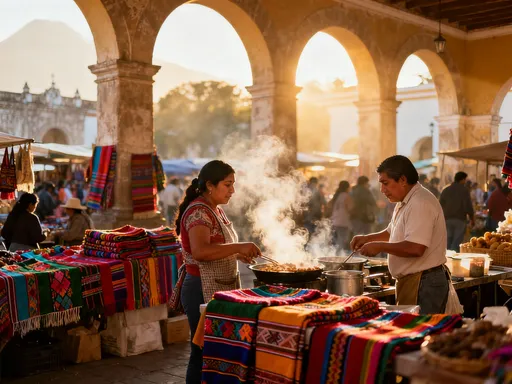
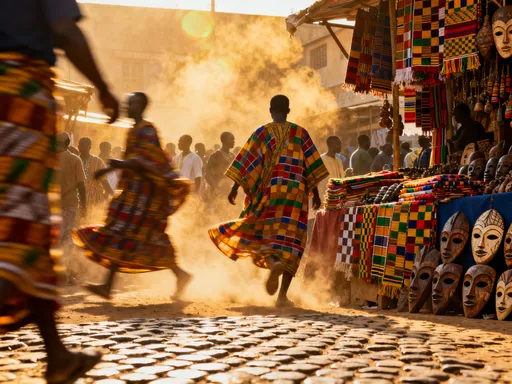
If Kumasi has a heartbeat, it pulses loudest in Kejetia Market—the largest open-air market in West Africa and one of the busiest commercial zones on the continent. Stretching across dozens of hectares, Kejetia is not just a place to buy goods; it is an economic engine that supports hundreds of thousands of families, traders, and transporters across Ghana and neighboring countries. The market operates around the clock, with different sections dedicated to textiles, foodstuffs, electronics, household goods, and live animals. Walking through its labyrinthine alleys is an immersive experience: the air thick with the scent of smoked fish, ripe plantains, and hand-woven kente cloth; the constant buzz of haggling in Twi, Hausa, and pidgin English; the rhythmic clatter of wooden carts and motorbikes weaving through narrow passageways.
For first-time visitors, Kejetia can be overwhelming. The sheer scale, noise, and density demand a certain level of preparation. It is advisable to arrive early in the morning when the heat is mild and the crowds slightly thinner. Wearing comfortable, modest clothing and keeping valuables out of sight helps ensure a safe and respectful experience. Transportation to the market is accessible via tro-tros (minibuses) or taxis, but visitors should agree on fares beforehand. Once inside, it’s wise to move with purpose, avoid prolonged staring, and ask permission before photographing vendors or goods.
Bargaining is expected, but it should be done with courtesy. A simple smile and a polite “How much for this?” in basic Twi—“Mediɛ sɛn?”—can open doors to friendly negotiation. Vendors appreciate effort, and small gestures go a long way. Beyond commerce, Kejetia reveals the ingenuity of informal economies. Women traders known as “market queens” often manage vast networks of suppliers and credit systems, demonstrating leadership and financial acumen that rival formal institutions. For those willing to look beyond the surface, Kejetia is not chaos—it is order in motion, a testament to collective resilience and entrepreneurial spirit.
Adansi and Asafo: The Traditional Quarters
Just beyond the commercial intensity of the city center lie the older residential neighborhoods of Adansi and Asafo—districts where lineage, land, and legacy shape daily life. These areas are home to extended family compounds, many of which have existed for generations. Traditional Ashanti architecture is still visible in the form of courtyard houses with red clay walls, carved wooden doors, and corrugated iron roofs. Though modern materials have replaced some elements, the layout remains deeply symbolic: the central courtyard serves as a communal space for cooking, storytelling, and family meetings, reinforcing the values of unity and interdependence.
Chieftaincy remains a vital institution in these quarters. Each community is led by a chief and a council of elders who oversee land use, resolve disputes, and organize festivals. These leaders are not figureheads but active participants in community development. Their authority is derived from ancestral lineage and upheld through rituals, oral history, and public service. Visitors may not always see the chiefs in daily life, but their presence is felt in the respect shown to elders, the care taken in public speech, and the timing of festivals that mark the agricultural and spiritual calendar.
One of the most striking aspects of Adansi and Asafo is how tradition adapts without surrendering to modernity. Solar panels now sit atop ancestral homes. Young people use smartphones to record oral histories passed down by grandparents. Yet, core values—such as hospitality, respect for elders, and communal responsibility—remain intact. Public spaces like shrines and gathering halls are still used for rites of passage, naming ceremonies, and seasonal celebrations. These events are not staged for outsiders but are genuine expressions of identity. For travelers, the invitation to observe—even from a distance—is a privilege, not a right. It requires humility, patience, and a willingness to learn rather than lead.
Bantama: A Blend of Old and New
Bantama stands as a microcosm of Kumasi’s broader transformation—a district where history and progress coexist in constant dialogue. Once a stronghold of Ashanti military power, Bantama today is a thriving urban neighborhood with a mix of residential, religious, and educational institutions. It is home to several senior high schools and technical colleges, making it a hub for youth and intellectual activity. The presence of these schools has contributed to a growing middle class, with new housing developments, internet cafes, and family-run businesses reshaping the landscape.
Religious life in Bantama is diverse and deeply rooted. Mosques, churches, and traditional spiritual shrines exist in close proximity, reflecting the pluralism that characterizes much of Ghanaian society. Sunday mornings bring the sound of gospel choirs; Friday afternoons echo with the call to prayer; and during festival seasons, drumming and libation rituals honor ancestral spirits. This coexistence is not without tension, but overall, it demonstrates a culture of tolerance and mutual respect that has been carefully nurtured over decades.
Infrastructure improvements—such as paved roads, street lighting, and improved water access—have enhanced quality of life, though challenges remain. Drainage issues during the rainy season and occasional power outages remind residents that development is ongoing, not complete. Yet, the spirit of innovation is evident. Local entrepreneurs have launched mobile banking services, repair shops, and catering businesses that cater to students and professionals alike. Youth groups organize clean-up campaigns and cultural workshops, showing a deep investment in the future of their community. Bantama, therefore, is not just a place to live—it is a place being built, one decision at a time, by its people.
Sewam: The Arts and Craft Epicenter
Suame, often referred to locally as Sewam, is a district that thrives on skill, sweat, and ingenuity. Known across Ghana for its metalworking and auto-repair industries, Suame Magazine—as the industrial zone is formally called—is a sprawling network of workshops where thousands of artisans practice their craft daily. The name “magazine” dates back to colonial times, when the area served as an ammunition depot, but today it refers to a vibrant ecosystem of small-scale manufacturing and repair. Walking through its narrow lanes, one encounters the rhythmic clang of hammers on metal, the hiss of welding torches, and the constant hum of engines being dismantled and rebuilt.
What makes Suame remarkable is not just its productivity but its role as a training ground for future engineers and technicians. Many young men begin as apprentices at the age of 14 or 15, learning through observation, repetition, and mentorship. There are no formal classrooms, yet the knowledge transfer is rigorous and effective. Skills in welding, machining, electrical wiring, and engine repair are passed down through generations, creating a self-sustaining cycle of expertise. Some workshops have begun to adopt digital tools, using tablets to access repair manuals or online parts catalogs, blending tradition with innovation.
While the work is physically demanding and often conducted in challenging conditions—open-air workshops with limited safety equipment—the sense of pride among workers is unmistakable. They are not just fixing vehicles; they are keeping Ghana moving. International organizations have recognized Suame’s potential, and initiatives to improve ventilation, provide protective gear, and formalize training programs are underway. For visitors, guided tours are available through local cooperatives, offering a safe and educational way to witness this industrial heartbeat. These tours emphasize respect for workers and their environment, ensuring that curiosity does not become intrusion.
Tafo: The Green Escape
Just a short drive from the city center, Tafo offers a refreshing contrast to Kumasi’s urban intensity. Known for its nurseries, flower farms, and tree-lined streets, Tafo embodies the city’s nickname as the “Garden City of West Africa.” This reputation is no exaggeration—Kumasi has long prioritized green spaces, and Tafo plays a central role in maintaining that legacy. Rows of roadside nurseries display an astonishing variety of plants: ornamental flowers, fruit saplings, medicinal herbs, and shade trees. Families often stop to purchase young mango or avocado trees to plant in their compounds, linking personal growth with environmental stewardship.
The district’s cooler microclimate, due in part to its slightly higher elevation and dense vegetation, makes it a popular residential area. Tree canopies shade quiet streets where children play and elders sit under verandas in the late afternoon. Community gardens and small-scale farms contribute to local food security, growing vegetables like tomatoes, peppers, and garden eggs. Some residents have begun exploring eco-tourism opportunities, offering guided walks through botanical paths or hosting farm-to-table experiences that showcase local cuisine.
Yet, Tafo also faces environmental pressures. Urban expansion, plastic waste, and irregular waste collection threaten its green character. Deforestation for construction projects has raised concerns among environmental advocates. In response, local groups have launched tree-planting campaigns and recycling initiatives, often in partnership with schools and churches. These efforts reflect a growing awareness that sustainability is not a foreign concept but a necessary extension of traditional values—respect for the earth, responsible use of resources, and care for future generations. For visitors, Tafo offers a peaceful retreat and a reminder that cities can be both vibrant and green.
Nightlife and Urban Rhythms: From Day to Dusk
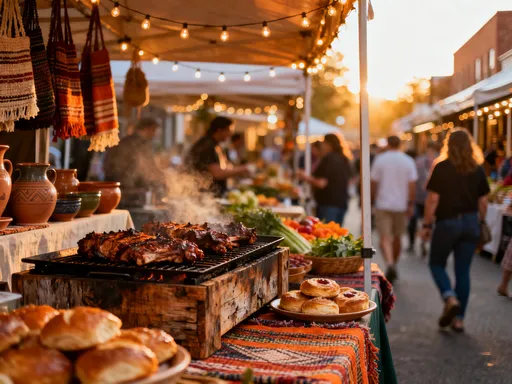
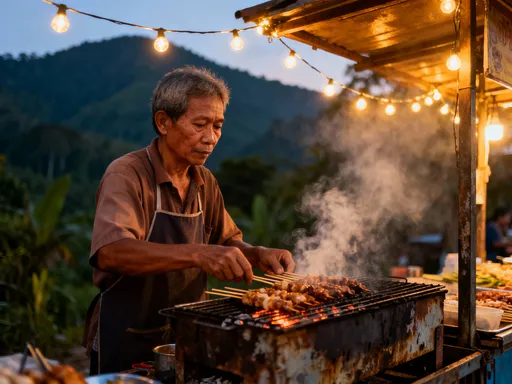
As the sun sets over Kumasi, the city undergoes a quiet transformation. The heat of the day gives way to a gentle breeze, and the streets come alive with a different kind of energy. Nightlife in Kumasi is not defined by loud clubs or late-night parties but by community-centered gatherings, street food culture, and musical expression. In neighborhoods like Bantama, Kejetia, and Asafo, small eateries known as “chop bars” begin to fill with workers, students, and families enjoying evening meals. The aroma of jollof rice, kelewele (spicy fried plantains), and grilled tilapia fills the air, drawing people to plastic tables under string lights.
Music is ever-present. Radios play highlife, gospel, and hiplife—a Ghanaian fusion of hip-hop and traditional rhythms. In some areas, live bands perform at community centers or open courtyards, their drumming echoing through the night. These are not commercial events but social moments—spaces where people reconnect, laugh, and unwind. For visitors, the best way to experience this rhythm is to walk quietly, follow local cues, and accept invitations with gratitude. A simple “Good evening” in Twi—“Maakye”—can open doors to conversation and shared meals.
Transportation after dark is generally safe, especially along main roads. Tro-tros operate until around 9 or 10 p.m., and taxis are available through ride-hailing apps or street calls. Women travelers are advised to stay in well-lit areas and avoid isolated streets, though Kumasi is widely regarded as one of Ghana’s safer cities. The prevailing social etiquette emphasizes respect, modesty, and calm demeanor. Loud behavior or excessive drinking is uncommon and often frowned upon. Nightlife here is not about escape but about belonging—a continuation of the day’s rhythms in a softer, more intimate key.
Conclusion: Why Kumasi’s Districts Matter
Kumasi is not a city to be rushed. Its value lies not in ticking off landmarks but in absorbing the quiet wisdom of its neighborhoods—the way a market trader hands you change with a smile, how a child waves from a courtyard, or the sound of a blacksmith shaping metal under a fading sun. Each district tells a story: Central Kumasi speaks of heritage and governance; Kejetia of commerce and resilience; Adansi and Asafo of lineage and continuity; Bantama of progress and balance; Suame of craftsmanship and innovation; Tafo of nature and care; and the nighttime streets of community and rhythm.
Together, these areas form a mosaic that reflects the complexity and beauty of urban African life. Kumasi challenges the notion that tradition and modernity must be at odds. Instead, it shows how they can dance together—sometimes cautiously, sometimes joyfully, always with purpose. For travelers, especially those seeking meaningful connections, the city offers a rare invitation: to move beyond the surface, to listen deeply, and to travel with intention.
Exploring Kumasi is not just about seeing a new place—it’s about seeing the world differently. It’s about recognizing that culture is not frozen in museums but lived in homes, markets, and streets. It’s about understanding that resilience is not dramatic but built in small acts: a repaired engine, a planted tree, a shared meal. In a world that often moves too fast, Kumasi reminds us to slow down, to honor the ordinary, and to find wonder in the everyday. That is its true gift—and one worth carrying home.