Wheels Through Wild Beauty: Montevideo’s Untamed Landscapes Uncovered
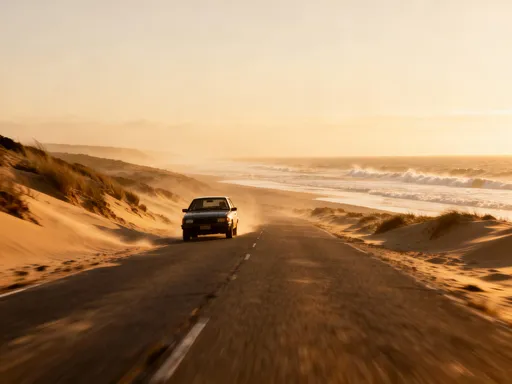
Imagine cruising along open roads with the Atlantic breeze rushing through your window, golden light spilling over quiet beaches and windswept dunes. I set out from Montevideo in a rental car, chasing sunrises and secret coastlines—and found a side of Uruguay few travelers see. This isn’t just a city trip; it’s a journey into raw, unfiltered nature, all within easy reach by self-drive. With every mile, the urban hum faded into bird calls, rippling reeds, and the steady rhythm of waves. Driving beyond the capital reveals a country that honors stillness, space, and natural harmony—where the landscape speaks in whispers, not shouts. This is Uruguay as it’s meant to be experienced: at your own pace, on your own terms.
Why Self-Driving Unlocks Uruguay’s True Essence
Traveling by car in Uruguay is not merely convenient—it is transformative. Unlike the constraints of fixed schedules or the limitations of public transit, a rental vehicle offers the freedom to explore at a personal rhythm, to pause where the light hits the water just right or to follow a dirt path that leads to an empty stretch of beach. The country’s compact size and well-maintained road network make self-driving an accessible option even for first-time visitors. From Montevideo, within minutes you can leave behind the city’s colonial architecture and tree-lined plazas, entering a landscape where cows graze in green pastures and the horizon stretches uninterrupted.
Road conditions in Uruguay are generally excellent, particularly along major routes like Route 1, Route 9, and Route 10, which connect the capital to coastal towns and inland regions. Paved highways are smooth and clearly marked, while secondary roads—many of them gravel or dirt—are typically passable with standard rental cars, especially during dry months. Navigation is straightforward, with reliable signage in Spanish and increasing GPS coverage, even in rural zones. Google Maps functions well for route planning, though downloading offline maps is advisable when venturing into more remote areas where signal may weaken.
One of the greatest advantages of driving is spontaneity. Public transportation in Uruguay, while functional for intercity travel, operates on fixed routes and timetables, often bypassing smaller villages and natural attractions. Guided tours offer convenience but limit flexibility—rarely allowing time for unplanned stops or quiet reflection. In contrast, a self-drive journey enables travelers to discover hidden coastal coves, pause at roadside fruit stands, or linger at a rural church surrounded by eucalyptus trees. These moments, unscripted and uncurated, often become the most memorable parts of a trip.
Moreover, driving allows access to protected natural areas that are otherwise difficult to reach. Wetlands, riverbanks, and coastal dunes lie just beyond the city limits, yet they remain uncrowded because they are not served by regular bus lines. With a car, you can arrive at dawn to watch herons wade through shallow waters or pull over at a scenic overlook as the sun dips below the horizon. This level of autonomy fosters a deeper connection to the land, turning a simple drive into a sensory journey through light, sound, and scent.
Montevideo as a Gateway to Natural Wonders
Often perceived as a quiet capital with European charm, Montevideo is more than a cultural hub—it is a threshold to some of South America’s most underappreciated natural beauty. Situated where the Santa Lucía River meets the Río de la Plata, the city occupies a unique ecological boundary between urban life and wild landscapes. Just twenty minutes from the bustling port and modern waterfront promenade, the terrain shifts dramatically: asphalt gives way to red-dirt roads, and city blocks transition into open fields dotted with grazing livestock and native grasses.
The Santa Lucía River, which supplies most of Montevideo’s drinking water, winds through protected wetlands teeming with birdlife. These marshlands, part of the Santa Lucía River Basin, are home to over 200 species of birds, including the striking roseate spoonbill and the black-crowned night heron. While much of the basin is restricted to protect water quality, several access points allow visitors to walk along boardwalks or view the wetlands from elevated platforms. The contrast between the city’s energy and the tranquility of these reserves is striking—a reminder that nature thrives even in the shadow of urban development.
From the western edge of Montevideo, the drive toward the interior reveals rolling hills covered in pastures and groves of eucalyptus and pine. The air grows cooler, scented with damp earth and wild thyme. Small farming communities appear at crossroads, their homes painted in faded blues and yellows, with clotheslines fluttering in the breeze. These villages, such as Progreso and Empalme Olmos, are not tourist destinations, yet they offer authentic glimpses into rural Uruguayan life. Markets sell fresh cheese, honey, and homemade bread—simple pleasures that reflect a slower, more deliberate way of living.
For travelers seeking immediate immersion in nature, the coastline just east of the city provides accessible entry points. Parque Rodó, a popular urban park, borders a long stretch of sandy beach where locals walk dogs, fly kites, and practice yoga at sunrise. But a short drive further reveals quieter shores, where dunes rise like soft waves and the only footprints are those of birds and the occasional fisherman. Montevideo, therefore, should not be seen as a destination unto itself, but as a launching pad—a place where the journey into Uruguay’s natural heart begins with the turn of a key.
Coastal Escapes: The Atlantic Shores Within Reach
Heading east from Montevideo along Route 10, the landscape unfolds into a series of coastal treasures, each with its own character. The road hugs the shoreline, offering panoramic views of the Atlantic Ocean, where waves roll in with steady persistence. One of the first stops is Playa Pocitos, a wide, sandy beach nestled within the city limits. Though popular with locals, it remains uncrowded compared to Mediterranean or Caribbean hotspots. Early mornings here are serene—seagulls cry overhead, joggers trace the water’s edge, and fishermen cast lines from the rocky breakwaters. The beach is safe for swimming during calm weather, and lifeguards are present in summer months.
Further along, Playa Malvín offers a more secluded experience. Surrounded by low cliffs and native vegetation, this stretch of sand is ideal for quiet contemplation. The tide recedes dramatically, exposing tidal pools where small crabs scuttle between rocks and anemones cling to stone. Children delight in exploring these miniature ecosystems, while adults find peace in the rhythmic sound of the surf. Parking is available along the access road, though spaces can fill up on weekends. For a more off-the-beaten-path experience, Buceo Beach—named after the neighborhood rather than diving activities—provides a peaceful alternative. Its gentle slope and soft sand make it family-friendly, and the lack of commercial development preserves its natural charm.
Beyond these well-known spots, lesser-traveled beaches await. Near the town of Solymar, a dirt track leads to a secluded cove where dunes rise over ten feet high, stabilized by marram grass. This area is part of a fragile coastal ecosystem, and visitors are encouraged to stay on designated paths to avoid erosion. The dunes serve as natural barriers against storm surges and provide habitat for native species like the red fox and the grassland sparrow. Birdwatchers will appreciate the presence of plovers, terns, and the occasional osprey circling overhead.
Photography enthusiasts will find endless opportunities along this route. The golden hour—just after sunrise or before sunset—paints the sand in warm hues and casts long shadows across the dunes. Reflections on wet sand create mirror-like effects, doubling the sky’s beauty. A polarizing filter helps reduce glare on water surfaces, while a wide-angle lens captures the vastness of the shoreline. For safety, it’s advisable to avoid isolated beaches at night and to heed local signage about strong currents or jellyfish warnings. With minimal light pollution, stargazing is also possible on clear nights, adding another dimension to the coastal experience.
Into the Countryside: Rolling Hills and Hidden Streams
While the coast captivates with its open horizons, Uruguay’s interior reveals a different kind of beauty—one defined by gentle topography, agricultural rhythms, and quiet solitude. The departments of Canelones and San José, lying northwest and west of Montevideo, are dotted with family-run estancias, vineyards, and nature reserves. Here, the land rolls in soft waves, cloaked in pastures of golden grass, with clusters of eucalyptus breaking the skyline. Streams meander through valleys, their banks lined with willows and native ferns, offering cool respites on warm days.
Driving through these regions feels like stepping into a pastoral painting. Cattle and sheep graze lazily under wide skies, and wooden fences follow the contours of the land. Small roadside stands sell fresh milk, artisanal cheeses, and seasonal fruits—peaches in summer, persimmons in autumn. These products reflect the country’s strong agricultural tradition, where sustainability and quality are prioritized over mass production. Many farms welcome visitors for tastings or short tours, providing insight into daily rural life without the commercialization often seen in tourist-heavy areas.
One of the most rewarding stops is the Reserva Natural del Santa Lucía, a protected area established to safeguard the watershed that feeds Montevideo’s drinking water. The reserve features walking trails that wind through grasslands and along the riverbank, offering views of herons, kingfishers, and sometimes even the elusive river otter. Interpretive signs in Spanish and English explain the ecological importance of wetlands and the conservation efforts underway. Picnic areas with benches and shade structures make it an ideal spot for a midday break, especially for families traveling with children.
Seasonal changes bring new dimensions to the countryside. In spring, wildflowers bloom in bursts of purple, yellow, and white, attracting bees and butterflies. By late summer, the fields turn golden, and the air carries the scent of dry grass and distant woodsmoke. Autumn brings cooler temperatures and misty mornings, perfect for slow drives with the windows down. These subtle shifts remind travelers that nature operates on its own timeline—one that rewards patience and presence.
Protected Paradises: National Parks and Ecological Reserves
Uruguay may be small in size, but its commitment to conservation is significant. The country has established several national parks and ecological reserves that protect diverse habitats, from coastal forests to freshwater ecosystems. Among the most notable is Parque Nacional Santa Teresa, located about four hours east of Montevideo. Though distant, it is a feasible long-day trip or an ideal overnight destination. The park spans over 5,000 hectares of forest, dunes, and coastline, offering well-marked trails, camping facilities, and historical ruins from a former military settlement.
Within the park, visitors can hike the Sendero Lagunar, a loop trail that passes by lagoons teeming with waterfowl, or follow the coastal path to Playa Grande, a pristine beach rarely touched by mass tourism. The forested areas are dominated by native trees like the olivo criollo and espinillo, providing shade and habitat for foxes, armadillos, and over 150 bird species. Rangers are available to answer questions and provide guidance, and entry fees are modest—around 400 Uruguayan pesos for adults, with discounts for seniors and children. The park opens daily from 8 a.m. to 6 p.m., and restrooms and drinking water are available at the main visitor center.
Closer to Montevideo, smaller reserves offer equally rewarding experiences. The Reserva Costera del Este, located near the town of Manantiales, protects a stretch of Atlantic coastline and adjacent dunes. It is particularly important for migratory shorebirds, some of which travel thousands of miles from North America. Wooden boardwalks allow visitors to observe wildlife without disturbing sensitive habitats. Similarly, the Reserva Biológica Lagoa Mirim, though partially in Brazil, includes Uruguayan wetlands that support rich biodiversity. These reserves emphasize low-impact tourism, with strict rules against littering, fires, and off-trail walking.
Visitors are encouraged to practice eco-friendly habits: carrying reusable water bottles, packing out all trash, and avoiding single-use plastics. Many sites have recycling bins, and some provide educational materials about local flora and fauna. By respecting these guidelines, travelers contribute to the preservation of these fragile environments. The experience of walking through a protected forest or standing at the edge of a quiet lagoon fosters a sense of stewardship—a recognition that beauty this pure must be protected for future generations.
Road-Trip Ready: Practical Tips for Driving in Uruguay
Preparing for a self-drive adventure in Uruguay requires attention to practical details, but the process is straightforward. First, ensure you have a valid driver’s license from your home country. While an International Driving Permit (IDP) is not always required, it is recommended, especially if your license is not in Spanish or English. Rental agencies in Montevideo, including major international brands like Hertz and Localiza, offer well-maintained vehicles with GPS systems and optional child seats. Booking in advance is advisable during peak seasons, such as December and January, when domestic tourism increases.
Fuel stations are plentiful along major highways, with brands like ANCAP (the national oil company) offering reliable service. Gasoline and diesel are priced higher than in North America but comparable to European rates. Most stations accept credit cards, though it’s wise to carry some cash for rural vendors. Speed limits are clearly posted: 100 km/h on highways, 60 km/h in towns, and 40 km/h near schools. Radar controls are common, and fines for speeding are enforced, so adherence to limits is essential.
Road signage is generally clear, with place names and distances displayed in white on green backgrounds. Warning signs for curves, animals, or unpaved sections are also present. Rural roads may be unpaved, especially in the interior, but they are usually well-compacted and navigable with a standard sedan during dry weather. However, after heavy rain, some gravel roads can become slippery or develop potholes, so checking local conditions is prudent. A basic emergency kit—containing water, a flashlight, a spare tire, and a first-aid pack—is recommended.
GPS navigation works well in most areas, but downloading offline maps via Google Maps or Maps.me ensures continuity in low-signal zones. Emergency numbers are posted on highway signs; Uruguay’s general emergency line is 911, which connects to police, medical, and fire services. For roadside assistance, rental companies typically provide 24-hour support. With these preparations, drivers can focus on the journey itself—on the unfolding landscapes, the warmth of small-town welcomes, and the quiet joy of discovery.
Why This Journey Changes How You See Uruguay
Driving beyond Montevideo reshapes the traveler’s understanding of Uruguay. No longer is it merely a small, stable country with a charming capital—it becomes a place of depth, contrast, and quiet majesty. The ease of access to unspoiled nature, the warmth of rural communities, and the rhythm of slow travel reveal a different kind of luxury: one measured not in amenities, but in presence, space, and connection. This is a country that invites you to breathe deeply, to notice the way light filters through eucalyptus leaves, or how a flock of birds rises suddenly from a marsh.
Self-driving fosters a sense of agency and intimacy. You are not a passive observer but an active participant in the journey. You choose when to stop, where to wander, and how long to stay. You meet locals not as customers, but as curious guests. You witness the changing seasons, the daily rhythms of farm life, and the enduring beauty of untouched landscapes. These experiences cultivate gratitude and mindfulness—qualities that linger long after the trip ends.
For women travelers, particularly those in the 30–55 age group, this kind of journey offers empowerment and renewal. It is safe, manageable, and deeply enriching. There is no need for extreme adventure or physical exertion—just the willingness to explore with an open heart. The roads of Uruguay lead not only to scenic vistas but to personal reflection, to moments of stillness, and to a reconnection with what matters most.
In a world that often feels rushed and fragmented, Uruguay’s quiet landscapes offer a rare gift: the chance to slow down, to see clearly, and to remember the beauty of simplicity. By taking the wheel and venturing beyond the city, travelers don’t just discover a country—they rediscover themselves. So pack your bag, rent a car, and let the open road guide you. The wild beauty of Uruguay awaits, just a short drive from the capital’s edge.