Hiking Through History: Where Trails Meet Culture in Toulouse
You know that feeling when a simple hike turns into something way bigger? That’s Toulouse for you. I went looking for mountain views, but instead stumbled upon cobbled paths lined with centuries-old chapels, hidden cloisters, and riverside ruins that whispered stories of pilgrims and poets. This isn’t just a city with trails—it’s a living museum you can walk through. Hiking here isn’t about altitude; it’s about depth. With every step along its ancient routes, you tread where monks once prayed, where travelers sought shelter, and where local life has unfolded quietly for generations. In Toulouse and its surrounding countryside, walking becomes a journey through time, culture, and quiet revelation.
Why Toulouse is a Hiker’s Cultural Paradise
Toulouse, often called La Ville Rose (the Pink City) for its distinctive terracotta brick architecture, sits at the heart of southwestern France, where the Garonne River winds through fertile plains and rolling hills. Unlike alpine destinations that draw hikers with dramatic peaks, Toulouse offers a different kind of allure—one where the landscape is shaped as much by human history as by nature. The region’s gentle topography makes it ideal for walking, but what truly sets it apart is the density of cultural heritage embedded in its trails. Here, a morning hike can lead you to a 12th-century bridge, a Romanesque chapel, or a vineyard path trodden by generations of farmers.
The city’s location places it at a crossroads of historical routes, most notably the Via Podiensis, one of the four main French pilgrimage roads to Santiago de Compostela in Spain. Each year, thousands of modern-day pilgrims pass through Toulouse, following in the footsteps of medieval travelers who journeyed for faith, penance, or personal transformation. This legacy has preserved a network of well-marked, historically significant paths that connect villages, abbeys, and natural landmarks. Walking these routes isn’t just exercise—it’s participation in a centuries-old tradition of slow, intentional travel.
What makes Toulouse exceptional is how seamlessly nature and culture intertwine. Trails wind through oak forests and along riverbanks, then open onto sunlit squares dominated by stone churches. You might begin your walk in the city’s bustling Capitole district and, within an hour, find yourself in near silence among vineyards and wild thyme. This blend invites a deeper kind of engagement. Without the rush of a car or the detachment of a tour bus, you notice details: the pattern of brickwork on a farmhouse, the sound of a distant bell from a village steeple, the way sunlight hits a centuries-old fresco through a narrow window. These are the moments that turn a hike into a quiet revelation.
Moreover, the region supports a growing ethos of sustainable tourism. Local authorities and hiking associations maintain trails with care, ensuring accessibility while preserving historical integrity. Signage is clear, rest areas are thoughtfully placed, and many routes are designed to pass through working agricultural landscapes, offering a glimpse into rural life that remains vibrant and authentic. For travelers seeking meaning beyond sightseeing, Toulouse provides a rare opportunity: to walk not just through scenery, but through stories.
The Most Authentic Cultural Trails Around Toulouse
From Toulouse, several well-documented hiking routes radiate outward, each offering a unique blend of natural beauty and historical depth. These are not manufactured tourist paths, but real trails with centuries of use, maintained today for both locals and visitors. Three stand out for their accessibility, cultural richness, and scenic variety.
The first is the official route of the Via Podiensis, which passes directly through Toulouse. This segment, part of the UNESCO-listed Chemins de Saint-Jacques-de-Compostelle, runs from Le Puy-en-Velay to the Pyrenees and onward to Spain. The stretch near Toulouse begins at the Basilica of Saint-Sernin, one of Europe’s largest remaining Romanesque churches and a major pilgrimage stop. From there, hikers follow marked trails southeast toward Moissac, a journey of approximately 50 kilometers that can be completed in two to three days. The path crosses the Garonne on historic bridges, passes through orchards and sunflower fields, and leads to villages where pilgrims have rested for centuries.
Along this route, walkers encounter the 11th-century Abbey of Moissac, renowned for its intricately carved cloister and tympanum depicting the Last Judgment. The experience of arriving on foot—tired, perhaps, but fully present—adds emotional weight to the visit. Unlike arriving by car or bus, walking allows time for reflection, for the landscape to unfold gradually, and for the body to sync with the rhythm of the journey. The trail is well-marked with yellow scallop shell symbols, the traditional sign of the Camino, and offers frequent access to small inns, bakeries, and municipal shelters for pilgrims.
A second notable route is the GR 36, a long-distance trail that links Toulouse to the Atlantic coast. While few complete the entire journey, the initial 30-kilometer segment toward Carbonne is ideal for a weekend hike. This path follows old drovers’ roads used by shepherds moving flocks to seasonal pastures. It passes through the Lauragais region, once known as the “land of a thousand châteaux,” where remnants of feudal towers and fortified farmhouses still dot the countryside. The terrain is gently rolling, with stretches of shaded woodland and open farmland, making it suitable for hikers of moderate fitness.
What makes the GR 36 special is its connection to rural traditions. Along the way, you may pass farmers tending livestock, encounter a village fête in full swing, or stumble upon a roadside stand selling fresh goat cheese and honey. These unplanned moments offer a living connection to the region’s culture. The trail also passes near the village of Montgiscard, where a 13th-century chapel stands in a quiet field, its walls covered in faded frescoes. There are no crowds, no entrance fees—just the quiet dignity of a place that has endured.
A third option, perfect for a day hike, is the Sentier des Lavandières (Washerwomen’s Path) along the Touch River, a tributary of the Garonne. This 10-kilometer loop begins in the village of Muret and follows an ancient footpath once used by women who came to wash clothes in the river. The trail is flat and well-maintained, lined with willow trees and dotted with old stone washing basins still visible in the water. Interpretive signs explain the social history of the route, including the communal role of laundry in pre-industrial villages. In spring and early summer, the surrounding meadows burst with wildflowers, and the sound of running water creates a peaceful backdrop. It’s a gentle hike, but one rich in historical resonance.
Walking Into History: Key Cultural Venues Along the Way
One of the most powerful aspects of hiking in Toulouse is the way it transforms visits to cultural sites from passive observation into active discovery. Arriving on foot changes your relationship to a place. You don’t just see it—you earn it. This is especially true at key heritage sites accessible via trail networks.
The Basilica of Saint-Sernin in Toulouse is a prime example. As a UNESCO World Heritage site and one of the most important Romanesque buildings in Europe, it draws visitors from around the world. But for hikers, especially those on the Camino, it holds deeper significance. Pilgrims have gathered here since the 11th century, drawn by the relics of Saint Saturnin (Sernin), the city’s first bishop, who was martyred in the 3rd century. The basilica’s soaring nave, thick columns, and intricate carvings create an atmosphere of solemn beauty. Walking into its cool interior after hours on the trail is a moment of quiet awe. The light filters through high windows, illuminating centuries of devotion etched into the stone.
Another destination reachable by foot is the medieval village of Montauban, located about 50 kilometers north of Toulouse. Connected by regional trails and rail links, it can be approached on foot from nearby stations. The town’s historic center, with its pink brick architecture and arcaded squares, feels like a smaller echo of Toulouse. The Collegiate Church of Saint-Théodard houses a treasury of religious artifacts, and the surrounding ramparts offer panoramic views of the Tarn River valley. Walking through its narrow streets, you sense the continuity of daily life—bakers opening their shops, children walking to school, elders sitting in the square. It’s history not as spectacle, but as lived experience.
Further afield, within a day’s journey by train and short hike, lies the Cistercian Abbey of Sénanque near Gordes in the Luberon region. Though not in Toulouse itself, it is part of the broader cultural landscape that many hikers explore as an extension of their journey. Nestled in a secluded valley, the 12th-century abbey is surrounded by lavender fields that bloom in July. Monks still live and work there, maintaining the traditions of prayer and manual labor. Visitors are welcome during daylight hours, and the silence of the cloister invites contemplation. Reaching such a place on foot—even if only the final few kilometers—creates a sense of arrival that no car ride can replicate.
These sites are not isolated monuments. They are waypoints in a living cultural landscape, connected by paths that have carried people for generations. Hiking allows you to experience them not as checkmarks on a tourist itinerary, but as destinations that emerge naturally from the journey itself.
What to Pack and How to Prepare for a Cultural Hike
Preparing for a cultural hike in Toulouse doesn’t require extreme gear or technical skills, but thoughtful planning enhances both comfort and respect for the places you’ll visit. The region’s climate is generally mild, but conditions can vary, especially between seasons. Packing light but wisely is key.
Start with footwear. Sturdy walking shoes or lightweight hiking boots with good grip are essential. Trails may be paved in villages, but quickly turn to packed earth, gravel, or uneven stone steps. Waterproof shoes are advisable in spring and autumn, when morning dew or rain can make paths slippery. Avoid sandals or urban sneakers, which offer little support on longer walks.
Clothing should be layered. Mornings can be cool, especially near rivers, but temperatures rise by midday. A moisture-wicking base layer, a light fleece or sweater, and a compact rain jacket roll easily into a daypack. Neutral or modest colors are practical and respectful, particularly when visiting churches or monasteries. Many sacred sites request that visitors cover shoulders and knees, so carrying a light scarf or shawl is a simple way to comply.
Carry at least one liter of water per person for a half-day hike, more in summer. While some trails pass through villages with fountains or cafes, others traverse open countryside with limited access. A reusable water bottle is both eco-friendly and economical. Snacks like nuts, dried fruit, or local bread and cheese provide energy without weighing you down. Don’t forget a small first-aid kit with blister treatment, sunscreen, and insect repellent.
Navigation tools are crucial. While many trails are well-marked, carrying a physical map or using a reliable hiking app (such as IGN Rando or Visorando) prevents confusion at junctions. The French National Geographic Institute (IGN) produces detailed topographic maps that show both trails and cultural sites. A compass or GPS device can be helpful in remote areas, though cell service is generally good near towns.
Respect is as important as preparation. When visiting churches, monasteries, or private lands, observe quiet behavior. Photography is often allowed in public areas, but may be restricted inside worship spaces or during services. Always ask before photographing people. Greet locals with a simple bonjour—it goes a long way. And remember, these trails are not just for tourists; they are part of everyday life for residents, so leave no trace, stay on marked paths, and close gates behind you.
Local Encounters: How Hiking Connects You to Living Culture
Some of the most memorable moments on a hike in Toulouse come not from landmarks, but from people. The trail leads you into the rhythm of rural life, where traditions are not performed for visitors, but lived day by day. These encounters—brief, unplanned, and genuine—add depth to the journey.
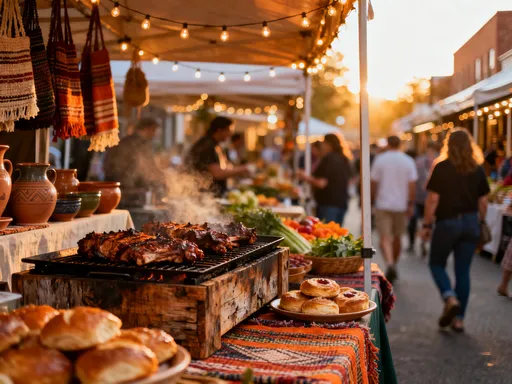
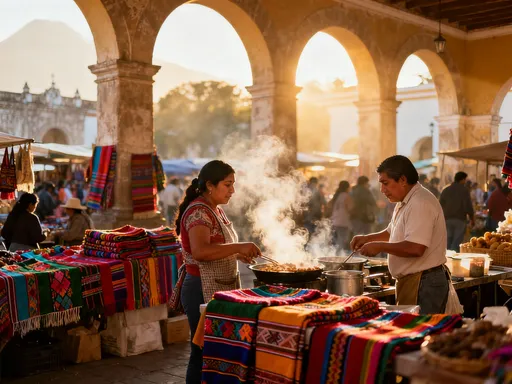
In villages like L’Isle-Jourdain or Saint-Gaudens, farmers’ markets often coincide with weekend hiking routes. You might arrive at midday to find stalls overflowing with ripe peaches, artisanal sausages, and cassoulet served in clay pots. Vendors speak in the soft cadence of the Occitan language, and prices are fair. Buying food directly from producers isn’t just economical—it’s a way of supporting local livelihoods and tasting the true flavor of the region.
Along the way, you may meet a winemaker tending his vines, a woodworker restoring an old barn, or a grandmother hanging laundry in her courtyard. A simple exchange—a shared smile, a comment on the weather—can open a conversation. Many locals appreciate that you’ve taken the time to walk rather than drive, seeing it as a sign of respect for their land and pace of life. Some may even invite you to rest in the shade, offering a glass of water or a piece of fruit.
These interactions are not staged experiences. They are the quiet pulse of Occitanie, a region that values hospitality, craftsmanship, and connection to the land. Hiking creates space for such moments because it slows you down. You’re not rushing from site to site; you’re moving with the landscape, open to what unfolds. In this way, the trail becomes more than a path—it becomes a bridge between cultures, generations, and ways of being.
Best Seasons and Hidden Tips for the Trail-Ready Traveler
The ideal time to hike around Toulouse is from late spring to early autumn, when the weather is warm but not extreme. April and May bring mild temperatures and blooming wildflowers—cistus, broom, and poppies paint the hillsides in vivid color. June and September offer long daylight hours and comfortable conditions, perfect for multi-day hikes. July and August can be hot, especially inland, so early starts—beginning at dawn—are recommended to avoid midday heat.
Winter hiking is possible, though some trails may be muddy or less accessible. The cultural sites remain open, and the quiet solitude of the countryside in winter has its own beauty. Frost on the fields, bare trees silhouetted against gray skies, and the occasional glimpse of a distant church spire create a contemplative atmosphere.
One hidden tip is to use the region’s excellent rail network to access trailheads without a car. Toulouse Matabiau station connects to smaller towns like Fonsorbes, Carbonne, and Montauban, many of which are starting points for marked hikes. Buy a regional train ticket, step off with your backpack, and begin walking within minutes. This eco-friendly approach reduces stress and allows you to hike one way, returning by train.
Another insider practice: start early. Not only does this help you avoid heat, but it also means arriving at cultural sites before crowds. Entering Saint-Sernin at 8 a.m., when the light is soft and the space nearly empty, is a profoundly different experience than visiting at noon. Similarly, village markets are liveliest in the morning, offering the best selection and freshest goods.
Rest strategically. Many trails have designated picnic areas or village squares with benches. Take time to sit, drink water, and observe. These pauses are not delays—they are part of the journey. And don’t hesitate to stop at a café for a coffee or a bowl of soup. These small pleasures are part of the region’s culture of bien vivre, or “living well.”
Why This Kind of Travel Changes You
Hiking through Toulouse is not about conquering distances or collecting photos. It’s about slowing down, paying attention, and allowing history, nature, and human connection to shape your experience. There is a quiet power in walking—step after step, mile after mile—that aligns the body with the mind and the moment. You begin to notice more: the texture of ancient stone, the scent of rosemary on the breeze, the way a village bell tolls the hour.
This kind of travel fosters presence. Without the distractions of speed or screens, you become attuned to the rhythm of the land and the lives that have unfolded here. You walk where pilgrims walked, where farmers tilled the soil, where artisans built homes that still stand. In doing so, you don’t just learn about history—you feel it.
And that feeling stays with you. Long after the blisters fade and the photos are uploaded, there remains a sense of having been part of something larger. Not a performance, not a checklist, but a genuine passage through time and place. Hiking in Toulouse teaches that culture is not confined to museums or guidebooks. It lives in the paths between villages, in the stones of a chapel wall, in the smile of a stranger who offers you bread.
So if you’re looking for more than a vacation—if you’re seeking a journey that moves you in body and spirit—consider lacing up your shoes and stepping onto the trails of Toulouse. Let the path guide you, not just to destinations, but to discovery. Because sometimes, the deepest adventures aren’t found in the height of a mountain, but in the depth of a single, mindful step.