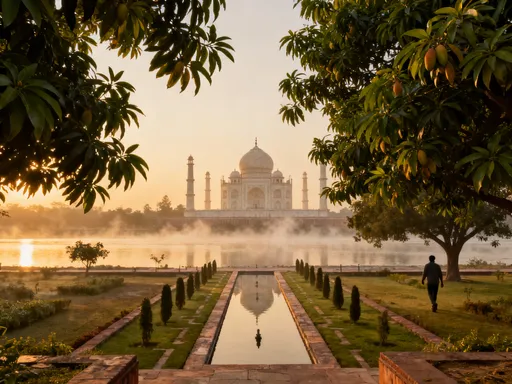
Behind the Veil: New Delhi’s Hidden Cityscape Secrets
You know what? New Delhi isn’t just about crowded streets and monuments. I stumbled upon something few travelers see — a side of the city where ancient alleys whisper stories and rooftop views steal your breath. This isn’t the New Delhi from guidebooks. It’s raw, real, and absolutely stunning. If you’re ready to look beyond the surface, you’re in for a mind-blowing urban adventure. Beyond the postcard sights lies a city of quiet courtyards, forgotten facades, and living traditions tucked behind layers of time. To discover it, you must slow down, observe closely, and listen — not with your ears, but with your presence.
Uncovering the Layers of New Delhi
New Delhi is often experienced in fragments — a hurried tour of India Gate, a brief stop at Humayun’s Tomb, a sensory overload in Chandni Chowk. But beneath these snapshots lies a deeper narrative, one shaped by centuries of conquest, culture, and coexistence. The city’s identity is not singular, but layered like sediment in stone. The Mughal era left behind winding lanes and walled neighborhoods, where life still pulses with the rhythm of generations past. Then came the British, who imposed geometric order with wide avenues, colonial bungalows, and the grand axis of Rajpath — now Kartavya Path — symbolizing imperial control. Today, modern high-rises and bustling markets add another stratum, creating a city that is both ancient and ever-evolving.
Yet, it is the contrast between planned New Delhi and the organic sprawl of Old Delhi that reveals the city’s true duality. In the south, Lutyens’ Delhi unfolds with symmetry and greenery, a city designed for governance and grandeur. Just a few kilometers north, Old Delhi erupts in a tangle of humanity, where rickshaws weave through spice-scented alleys and temple bells ring alongside the call to prayer. This is not chaos — it is complexity, a living urban fabric where every corner holds a story. The real magic begins when travelers move beyond the curated and step into this intricate web, where history isn’t preserved behind glass, but lived in the daily rituals of its people.
Understanding this duality is the first step in uncovering New Delhi’s hidden cityscape. It requires shifting perspective — from tourist to observer, from spectator to participant. The monuments are essential, yes, but they are only the surface. The soul of the city resides in the spaces between: the quiet courtyard behind a bustling market, the rooftop where families gather at dusk, the alley where a potter still shapes clay by hand. These are the places that reveal not just what New Delhi looks like, but what it feels like — alive, layered, and deeply human.
The Secret Life of Rooftops and Courtyards
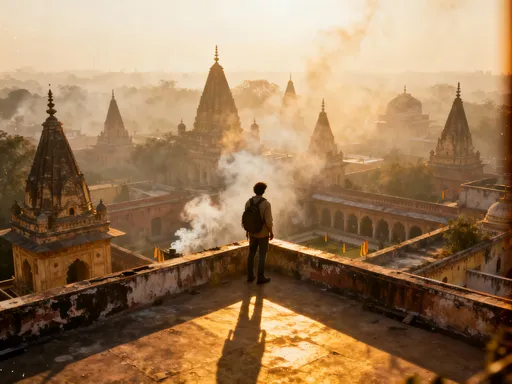
One of the most overlooked dimensions of New Delhi is its vertical life. While most visitors keep their eyes on the ground, the city’s rooftops offer a silent, elevated narrative. In neighborhoods like Paharganj and Chandni Chowk, where buildings rise three or four stories, the flat terraces become private worlds. From above, the city transforms. Minarets pierce the sky, temple domes glow in the evening light, and clotheslines crisscross like threads in a tapestry of daily life. These rooftops are not tourist attractions — they are family spaces, where mothers hang laundry, children play cricket, and elders sip tea as the sun sets behind the skyline.
Gaining access to these spaces requires trust, not tickets. A kind word to a shopkeeper, a shared cup of chai, or a respectful inquiry at a guesthouse can open doors — literally. Some small lodgings welcome guests to their rooftops, offering unobstructed views of the Jama Masjid or the Red Fort at golden hour. The experience is not about grandeur, but intimacy. You’re not observing a monument — you’re sharing a moment with the city, from the same vantage point as those who call it home.
Courtyards, too, hold quiet significance. Tucked behind unassuming doors, these inner spaces are the heart of many old havelis and residential clusters. They are oases of calm, often centered around a well, a tree, or a small shrine. Light filters down from above, and the sounds of the street fade into a distant hum. In these courtyards, time moves differently. Women chat as they grind spices, children chase each other in circles, and the walls — cracked and stained with age — seem to remember every generation that has passed through. These spaces are rarely marked on maps, but they are essential to understanding how people live, not just survive, in a dense urban environment.
Forgotten Architecture in Plain Sight
Walk through New Delhi with attention, and you’ll begin to notice buildings that don’t belong to any single era. They stand quietly, often ignored, yet they tell powerful stories. Colonial-era bungalows with peeling paint and overgrown gardens linger in neighborhoods like Civil Lines and Lodhi Colony. Their wide verandas, high ceilings, and jali work were designed for a different climate and lifestyle — one of leisure and colonial privilege. Today, many are repurposed as offices or subdivided into apartments, their original grandeur softened by time and neglect.
Equally fascinating are the Art Deco structures hidden between markets and traffic circles. Inspired by 1930s global design, these buildings feature geometric patterns, curved balconies, and streamlined facades. You’ll find them near Connaught Place and along Janpath — not as museums, but as active storefronts and clinics. A pharmacy might occupy the ground floor, while a tailor works above, the building’s original elegance barely noticed by those who pass every day.
Then there are the havelis — ancestral mansions of merchants and nobles — tucked into the maze of Old Delhi. Some are abandoned, their carved wooden doors rotting, their courtyards overtaken by weeds. Others are still inhabited, their families preserving fragments of the past amid modern life. These buildings are not hidden because they are inaccessible, but because they lack signage, promotion, or preservation. They are part of the city’s background, like old songs hummed without thought. Yet, they represent a crucial chapter in New Delhi’s architectural journey — one that blends Mughal craftsmanship, Rajput aesthetics, and later European influences into a unique urban language.
Walking the Hidden Alleys of Urban Culture
The true rhythm of New Delhi is not found in its landmarks, but in its back alleys. Just behind the tourist-heavy lanes of Chandni Chowk, for instance, lie narrow passages where the city wakes up before the crowds arrive. At 5:30 a.m., the air is cool, the streets damp from overnight cleaning, and the first chaiwalas light their stoves. Steam rises in curls as they pour tea into small glasses, serving shopkeepers, delivery men, and early commuters. This is not performance — it is routine, a quiet ballet of survival and community.
Follow these alleys deeper, and you’ll find artisans whose trades have outlasted empires. A bookbinder sits cross-legged on a frayed mat, stitching leather covers by hand. A knife sharpener pedals his cart, calling out in a singsong voice. A flower seller strings marigolds into garlands for temple offerings, her fingers moving with practiced grace. These are not souvenir-makers for tourists — they are providers for locals, their skills passed down through families. Their workspaces are tiny, often just a shelf or a wooden crate, but they are vital threads in the city’s economic and cultural fabric.
Walking these lanes is an act of discovery. You’ll see a temple courtyard where a priest sweeps the steps, a mosque where boys roll out prayer mats, a Sikh gurdwara where volunteers prepare langar before sunrise. Religions coexist not as concepts, but as daily practices, woven into the same streets. There is no separation — only shared space, shared rhythms, and an unspoken understanding of mutual respect. This is urban culture in its purest form: not curated, not commercialized, but real.
How to Navigate Like a Local Explorer
To experience these hidden layers, timing and approach matter more than any map. The best hours to explore are early morning, between 5:30 and 8:00 a.m., when the city is still soft, the light gentle, and the pace unhurried. This is when the alleys are most alive with authentic activity and least crowded with tourists. Midday heat and afternoon chaos will drive most visitors indoors, but the early riser is rewarded with quiet streets and open doors.
Transportation choices also shape the experience. While metro trains are efficient for long distances, they bypass the intimate spaces. Cycle rickshaws, however, can glide through narrow lanes inaccessible to cars. Many drivers are happy to double as informal guides, pointing out local landmarks or sharing stories in broken but warm English. Walking is ideal for short stretches, allowing you to pause, observe, and absorb details — the scent of frying samosas, the sound of a hammer on metal, the pattern of shadows on a wall.
Respect is the most important tool. Always ask before entering private spaces or photographing people. A smile, a nod, or a simple “May I?” goes further than any phrasebook sentence. Dress modestly — long sleeves and trousers or skirts below the knee — to blend in and show cultural sensitivity. Carry a small bag with water, tissues, and a notebook, but avoid large cameras or flashy gear that draw attention. Most importantly, practice quiet observation. Listen more than you speak. Let the city reveal itself slowly, not on your schedule, but on its own terms.
Photographing the Unseen Cityscape
Capturing New Delhi’s hidden beauty requires more than a good lens — it demands patience and ethics. The narrow alleys create natural frames, where shafts of morning light cut through like spotlights. A single sunbeam might illuminate a child’s face, a pile of spices, or a weathered door. These moments are fleeting, so being ready — with camera settings adjusted and distractions minimized — increases your chances of preserving them.
Rooftop photography offers sweeping perspectives, especially during golden hour. The hour after sunrise and before sunset bathes the city in warm, soft light, turning brick and stone into glowing textures. From an elevated view, you can capture the interplay of religious structures — a temple spire beside a mosque dome — without intrusion. Reflections in puddles after rain add another dimension, doubling the city in shimmering symmetry.
But photography must never come at the cost of dignity. Always ask permission before photographing people, especially women and children. If someone declines, accept it gracefully. Avoid using zoom lenses to capture candid moments from a distance — it feels invasive and undermines trust. Instead, engage first, build a brief connection, and let the photo follow naturally. Many of the most powerful images come not from perfect composition, but from genuine interaction — a shared laugh, a offered seat, a moment of mutual recognition.
Why These Secrets Matter Beyond Aesthetics
The hidden cityscape of New Delhi is more than a collection of quiet alleys and forgotten buildings — it is a reminder of what cities are for. In an age of speed and spectacle, these spaces invite slowness and presence. They ask us to look closer, to listen longer, to appreciate the resilience of ordinary life. A crumbling haveli is not just architecture — it is memory. A rooftop at dusk is not just a view — it is belonging. A chaiwala at dawn is not just a vendor — he is continuity.
These places matter because they preserve the soul of a city often overshadowed by noise and development. They are not preserved behind velvet ropes, but lived in, adapted, and carried forward. In discovering them, we do not just see New Delhi differently — we learn to see any city differently. We begin to understand that urban life is not just about monuments and metros, but about the quiet moments in between.
So the next time you travel, resist the urge to check off landmarks. Instead, wander with curiosity. Ask a local for directions to their favorite chai stall. Climb a staircase that leads to a rooftop. Sit in a courtyard and watch the world move slowly. These are not detours — they are the journey. And in them, you’ll find not just a city, but a deeper connection to the human spirit that shapes it. New Delhi’s secrets are not hidden because they are meant to be kept — they are waiting, quietly, for someone willing to look.