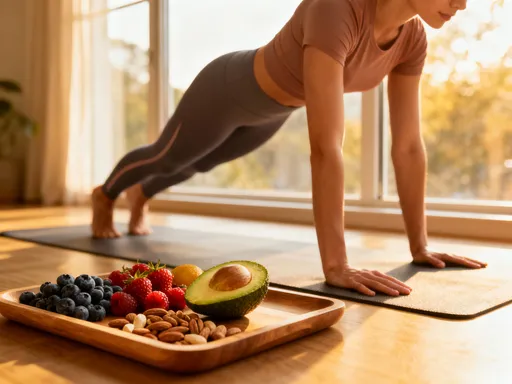
How I Nailed My Pilates Goals with Real Food Choices
You don’t have to overthink eating right to see results with Pilates. I learned this the hard way—starting with strict diets that left me drained. Then I shifted to balanced, whole-food eating, and everything changed. Energy levels rose, recovery got faster, and my body responded better to workouts. This isn’t about extreme rules or cutting out entire food groups. It’s about making practical, sustainable choices that actually support your Pilates journey. Let’s break down what really works.
The Hidden Gap Between Pilates Practice and Diet
Many individuals who practice Pilates do so with clear intentions: to build strength, improve posture, increase flexibility, and cultivate a deeper connection between mind and body. Yet, despite consistent attendance in classes and dedication to proper form, some find their progress stalling. The missing piece often lies not in their movement practice, but in their plate. There is a quiet but significant gap between how people move and how they eat—especially when it comes to low-impact, mindful disciplines like Pilates.
Unlike high-intensity training that burns calories rapidly and demands obvious fuel, Pilates operates on a subtler level. Its benefits unfold over time through precision, alignment, and control. Because the physical exertion may not feel as taxing, many assume that nutrition doesn’t play a major role. This misconception can undermine even the most disciplined routines. Without adequate nourishment, muscles struggle to recover, joints become stiff, and concentration during sessions wanes. Over time, fatigue accumulates, increasing the risk of injury and reducing overall performance.
Consider a woman in her early 40s who attends Pilates three times a week. She focuses on perfecting her hundred, improving her roll-up, and mastering the teaser. But her breakfast is often skipped, lunch consists of a light salad with little protein, and dinner is delayed until late in the evening. Despite her commitment, she feels sluggish by midweek and notices her balance is off during single-leg stretches. The issue isn’t her technique—it’s her fuel. Her body lacks the consistent energy and building blocks needed to support the neuromuscular demands of Pilates.
Nutrition affects more than just physical stamina. It plays a direct role in joint health, inflammation levels, and mental clarity—all of which are essential for a successful Pilates practice. The connective tissues that allow for smooth movement require specific nutrients to stay supple. Chronic low-grade inflammation, often driven by processed foods and sugar, can lead to stiffness and reduced range of motion. Meanwhile, blood sugar fluctuations from irregular eating patterns can impair focus, making it harder to maintain the concentration required for controlled movements.
Why Pilates Needs More Than Just Low-Calorie Eating
A common trap among those pursuing a lean, toned physique through Pilates is the belief that eating less will yield better results. This mindset often leads to overly restrictive diets that severely limit calorie intake. While weight management is a valid goal for some, equating fewer calories with improved Pilates performance is a flawed assumption. In reality, underfueling can do more harm than good, especially in a discipline that relies on muscular endurance, stability, and mental engagement.
Pilates is not about explosive power or maximal strength. Instead, it emphasizes sustained muscle activation, precise coordination, and postural awareness. These functions require a steady supply of energy. When the body is deprived of sufficient calories, it begins to conserve resources. Metabolism slows, muscle tissue may be broken down for fuel, and fatigue sets in. As a result, practitioners may find themselves struggling to maintain proper form during exercises like the spine stretch or the swan, increasing the likelihood of compensation patterns and potential strain.
Moreover, extreme calorie restriction can disrupt hormonal balance, particularly in women. Cortisol, the stress hormone, may rise, contributing to muscle tension and slower recovery. At the same time, levels of leptin—a hormone that regulates appetite and energy balance—can drop, leading to increased hunger and difficulty sleeping. Poor sleep further impairs muscle repair and cognitive function, creating a cycle that undermines both physical and mental aspects of the Pilates practice.
What truly supports Pilates is not a low-calorie diet, but a nutrient-dense one. Nutrient density refers to the amount of vitamins, minerals, antioxidants, and beneficial compounds a food provides relative to its calorie content. Foods like leafy greens, sweet potatoes, eggs, legumes, and fatty fish deliver high-quality nourishment without excess calories. They support the development of long, lean muscles by providing the amino acids needed for repair and the micronutrients essential for cellular function. This approach fosters sustainable results without sacrificing energy or well-being.
The Core Principles of a Pilates-Friendly Diet
To get the most out of Pilates, nutrition must align with its foundational goals: control, precision, balance, and efficiency. A Pilates-friendly diet is built on three core principles—balanced macronutrients, consistent hydration, and mindful meal timing. These elements work together to sustain energy, support muscle function, and enhance body awareness, allowing practitioners to move with greater ease and intention.
First, balanced macronutrients are essential. This means consuming moderate amounts of complex carbohydrates, high-quality protein, and healthy fats throughout the day. Carbohydrates serve as the primary fuel source for physical activity, particularly for the nervous system and muscle contractions. However, not all carbs are equal. Refined grains and sugary foods cause rapid spikes and crashes in blood sugar, leading to energy dips during class. In contrast, whole grains like oats, quinoa, and brown rice release glucose gradually, supporting steady focus and endurance.
Protein is equally important. It provides the amino acids necessary for muscle repair and maintenance. After a Pilates session, microscopic tears occur in the muscles—this is a normal part of strengthening. Without adequate protein, recovery slows, and the body may struggle to build the long, defined lines that many seek through Pilates. Good sources include Greek yogurt, chicken breast, tofu, lentils, and eggs. Including a source of protein in every meal helps maintain satiety and supports consistent muscle turnover.
Healthy fats should not be overlooked. They play a crucial role in joint lubrication, hormone production, and brain health. Omega-3 fatty acids, found in fatty fish, flaxseeds, and walnuts, have anti-inflammatory properties that help reduce stiffness and support connective tissue health. Avocados and olive oil provide monounsaturated fats that contribute to cellular integrity and sustained energy. These fats also help the body absorb fat-soluble vitamins like A, D, E, and K, which are vital for bone and immune health.
Fiber and gut health are additional components of a Pilates-supportive diet. A diet rich in vegetables, fruits, legumes, and whole grains promotes a healthy digestive system, which in turn reduces systemic inflammation. Emerging research links gut health to overall well-being, including mood and immune function—both of which influence how one feels during and after exercise. A calm, well-functioning digestive system also supports proper posture, as bloating and discomfort can interfere with core engagement and breathing mechanics.
What to Eat Before and After a Pilates Session
Timing your meals around your Pilates practice can significantly impact your performance and recovery. Eating too close to class can cause discomfort, while going in completely fasted may leave you feeling weak or lightheaded. The ideal approach is to consume a small, balanced meal 1 to 2 hours before your session. This gives the body enough time to digest while ensuring a steady supply of energy.
A pre-Pilates meal should include easily digestible carbohydrates and a moderate amount of protein. For example, a slice of whole grain toast with almond butter and a banana offers complex carbs for fuel and some protein and fat for satiety. Alternatively, a small bowl of oatmeal with berries and a sprinkle of chia seeds provides fiber and sustained energy. These options are gentle on the stomach and prevent blood sugar crashes during class. It’s best to avoid high-fat or high-fiber foods immediately before practice, as they take longer to digest and may cause bloating.
After your session, the body enters a critical window for recovery—typically within 30 to 60 minutes. During this time, muscles are most receptive to replenishing glycogen stores and repairing tissue. Consuming a combination of protein and complex carbohydrates helps accelerate this process. A simple post-workout snack could be a hard-boiled egg with a piece of fruit, a smoothie made with spinach, banana, protein powder, and almond milk, or a small serving of grilled chicken with roasted sweet potatoes.
Hydration should also be prioritized post-session. Even mild fluid loss can affect muscle function and recovery. Drinking water after class helps restore balance and supports the removal of metabolic byproducts. For those who sweat heavily or attend longer sessions, adding a pinch of natural salt to water or consuming a small amount of coconut water can help replenish electrolytes without unnecessary sugars.
Consistency in meal timing fosters a rhythm that supports overall energy balance. Skipping meals or irregular eating patterns can lead to overeating later in the day or poor food choices due to intense hunger. By planning ahead and listening to hunger cues, practitioners can maintain a steady flow of nutrients that keeps the body functioning optimally and ready for each session.
Foods That Support Flexibility and Joint Health
Flexibility is often thought of as something achieved solely through stretching and movement. While regular practice certainly improves range of motion, diet plays an equally important role in maintaining the health of connective tissues, tendons, and ligaments. Certain nutrients directly influence the elasticity and resilience of these structures, making it easier to move deeply and safely in Pilates postures.
Omega-3 fatty acids are among the most beneficial nutrients for joint health. Found in fatty fish like salmon, mackerel, and sardines, as well as in flaxseeds and walnuts, omega-3s help reduce inflammation throughout the body. Chronic inflammation can lead to stiffness, swelling, and discomfort in the joints, limiting mobility and making movements like the spine twist or the saw more difficult. By incorporating omega-3-rich foods regularly, practitioners may notice improved ease in rotational movements and reduced post-class soreness.
Vitamin C is another key player. It is essential for the production of collagen—a structural protein that forms the basis of skin, tendons, and ligaments. Without adequate vitamin C, collagen synthesis slows, which can weaken connective tissues and increase the risk of injury. Citrus fruits, bell peppers, strawberries, and broccoli are excellent sources. Including these in daily meals supports the integrity of the body’s support systems, allowing for greater flexibility and resilience over time.
Collagen-supportive nutrients extend beyond vitamin C. Glycine and proline, amino acids found in bone broth, chicken, and egg whites, are building blocks of collagen. While the body produces these naturally, dietary sources can enhance production, especially as we age and natural collagen levels decline. Some individuals choose to supplement with hydrolyzed collagen peptides, though whole food sources remain the most accessible and natural option.
Antioxidant-rich foods also contribute to joint and tissue health. Berries, dark leafy greens, and nuts contain compounds that neutralize free radicals—unstable molecules that can damage cells and accelerate aging. By reducing oxidative stress, these foods help maintain the suppleness of muscles and connective tissues. A colorful plate filled with a variety of plant-based foods not only supports flexibility but also enhances overall vitality and recovery.
Hydration and Its Silent Role in Pilates Performance
Water is often overlooked in discussions about fitness, yet it is one of the most fundamental elements of optimal performance. Every cell, tissue, and organ in the body depends on water to function properly. In the context of Pilates, hydration plays a quiet but powerful role in muscle contraction, spinal health, balance, and mental focus—all of which are essential for a successful practice.
Muscles are approximately 75% water. When dehydration occurs—even at mild levels of 1-2% fluid loss—muscle efficiency decreases. This can manifest as cramping, reduced strength, and slower recovery. During Pilates, where controlled contractions are central, even slight dehydration can impair the ability to engage the core fully or maintain stability in positions like the plank or the side leg series. Additionally, dehydrated muscles are more prone to strain, increasing the risk of injury over time.
The spine, a focal point in Pilates, is particularly sensitive to hydration. The intervertebral discs that cushion the vertebrae are composed largely of water. Throughout the day, these discs lose fluid due to compression from gravity and movement. Proper hydration helps replenish this fluid, maintaining disc height and spinal flexibility. In well-hydrated individuals, movements like the roll-down and the spine stretch are often smoother and less painful. Conversely, chronic dehydration can contribute to disc degeneration and reduced mobility.
Hydration also affects cognitive function. Pilates requires concentration, body awareness, and breath control. When the brain is dehydrated, attention wavers, reaction time slows, and coordination suffers. This can lead to misalignment, poor timing, and frustration during class. Staying hydrated supports mental clarity, allowing practitioners to stay present and execute movements with greater precision.
Meeting daily fluid needs doesn’t require complicated regimens. The general recommendation is to drink enough water so that urine is pale yellow. For most women, this means about 8 to 10 cups (2 to 2.5 liters) per day, though needs vary based on activity level, climate, and individual physiology. Herbal teas, water-rich fruits like watermelon and cucumber, and soups can also contribute to fluid intake. The key is consistency—sipping water throughout the day rather than consuming large amounts at once.
Building a Sustainable Eating Routine That Fits Your Life
The most effective nutrition plan for Pilates is one that can be maintained over time without causing stress or deprivation. Perfection is not the goal; consistency and balance are. A sustainable eating routine respects the demands of daily life—family schedules, work commitments, and personal preferences—while still supporting physical well-being and fitness goals.
Mindful eating is a cornerstone of this approach. It involves paying attention to hunger and fullness cues, eating without distraction, and savoring each bite. This practice helps prevent overeating and fosters a healthier relationship with food. Instead of following rigid rules, individuals learn to listen to their bodies and make choices that feel nourishing rather than punitive. For example, choosing a satisfying breakfast with protein and fiber may prevent mid-morning cravings that lead to unhealthy snacking.
Home cooking plays a significant role in maintaining control over ingredients and portion sizes. Preparing meals at home allows for the inclusion of fresh, whole foods and reduces reliance on processed items high in sodium, sugar, and unhealthy fats. Simple strategies like batch cooking on weekends, keeping healthy staples on hand, and planning meals in advance can make healthy eating more manageable during busy weeks. A well-stocked kitchen with oats, eggs, frozen vegetables, canned beans, and lean proteins makes it easier to assemble balanced meals even on hectic evenings.
Flexibility is equally important. There will be days when plans change, meals are eaten out, or treats are enjoyed. These moments do not derail progress. What matters is the overall pattern. A sustainable routine includes room for enjoyment and adaptability, making it more likely to last. The goal is not to follow a diet, but to build a lifestyle where healthy choices feel natural and supportive.
In the end, nutrition and Pilates share a common purpose: enhancing body awareness, promoting control, and nurturing long-term vitality. When food is viewed not as an obstacle, but as a partner in the journey, the results go beyond physical transformation. Energy improves, mood stabilizes, and the connection between mind and body deepens. By making thoughtful, real food choices, practitioners can unlock the full potential of their Pilates practice and carry its benefits into every aspect of life.